Photo

Scenes from a roadtrip

When Liz asked me what I wanted to do to celebrate my 50th birthday, I told her that I wanted to go to a Cubs game in Wrigley. I hadn’t been to Wrigley since 1988 when we moved back to South Carolina. Liz and I decided to make it happen, albeit a week before my birthday. Instead of dropping one image at a time, I figured I’d take more of a photo essay approach.

We dropped our kids off at Lutheridge in Arden, North Carolina. Our oldest is a counselor there and the kids have always been Christmas week campers. Once they were settled, Liz and I hit the road.

My three kids ready for camp Bob and Liz ready to start the roadtrip

On the way up, we visited Buc-ee’s for the first time and eventually stopped for the night in Indiana. Liz had never seen Batavia, Illinois where I grew up, so that was our first stop. The next day, we got to Batavia around lunchtime and ate in a pub where the grocery store used to be. Spent some time driving around town and got to see our old house and the church that my dad was pastor. Crazy to see how much has changed and how much is still the same.

The sanctuary of Bethany Lutheran Church

In retrospect, this workroom in the church was a great influence for me, filled with copiers, paper, folding machines. Everything a someday graphic designer might love. The door was exactly the same as I remember it.

Workroom sign on a wooden door.

We found the old windmill by the Fox River where we used to go sledding…

Old windmill at the top of a grassy hill.

…and even paid a visit to the coolest school field trip location in the world, Fermilab.

Fermilab's Wilson Hall

Once we got to Chicago, we walked over to Lake Michigan and Navy Pier.

Liz looks out over Lake Michigan. Liz sits in a giant baseball glove.

We walked along the Chicago River. And the John Hancock building was a couple of blocks from our hotel. We tried to walk as much as possible, but the heat was pretty bad the last day we were there.

The Chicago River with a bridge over it and buildings surrounding it. Looking up at the second tallest building in Chicago

We met a few dinosaurs at the Field Museum. I wanted to visit Sue, the T-Rex. But Liz loved Maximo, the Titanosaurus.

Sue, the T-rex Maximo, the Titanosaurus. Liz poses by the leg of a dinosaur fossil.

We made it to Wrigley for the Cubs game. I got to see the Cubs beat the Royals 6-0 in a game that included a little bit of everything including Suzuki stealing home.

Marque at Wrigley Bob and Liz with the Cubs' World Series trophy. A daytime view of Wrigley behind home plate. A mighttime view of Wrigley behind home plate. Cubs Win on an LED sign

To break up the trip on the way back, we stopped in Lexington, Kentucky and had an amazing dinner at Dudley’s on Short. I’ve never been to Lexington before and it was great.

Liz annoyed that I'm taking a picture of her while we are at dinner.

We had a wonderful time, even if road construction threw us a couple of curveballs. Really thankful for Apple Maps, which made some time-saving route recommendations. The kids had a great time at camp. And we’re finally back home.

Next week, we celebrate my 50th birthday for real, but this experience was exactly what I wanted.


Bob Wertz is a type designer, Ph.D. student and researcher living in Columbia, South Carolina. He’s been blogging since 2008.

Excited that Cotton Bureau has finally added custom stickers. I added a few sticker designs, including my old film camera stickers.

A stylized camera illustration sticker featuring the words X-700 and SMILE on its body.

SbB Emote: A colorful faux emoji set built in Fontstruct

I mentioned a couple of days ago that I was playing around with some new-to-me features and bricks in Fontstruct. After I finished SbB Roundabout1, I decided those techniques would work really well on a symbol font. So I started playing around with building a couple of little faux emoji. Then decided that I needed to add some color. And before long, I’ve built an adorable set of icons in Fontstruct… SbB Emote.

Characters from SbB Emote, a symbol font

I don’t know which my favorite is – either the robot or the minifig-inspired smiley. “Happy Frankenstein” is a classic, too. In total, the set has 63 glyphs. The build used over 140 different blocks and 6 colors. It’s probably the most complex Fontstruction I’ve made, since I normally like to keep it really simple.

Characters from SbB Emote, a symbol font

One cool side effect of using the techniques and blocks from SbB Roundabout is that the two designs work really well together.

SbB Emote pairs well with SbB Roundabout.

I think I’m at a stopping point for the time being. I’ll be honest, I really need to be working on my dissertation and independent study. But I’ve got some ideas for characters I could have drawn… so you never know when I’ll revisit the font. I’m still not sure what to make of color fonts, but I could see how a custom icon font could be useful.

I think you have to be a patron on Fontstruct to download color fonts, so most of you won’t be able to download SbB Emote, but SbB Roundabout is free to download with an account.


Bob Wertz is a type designer, Ph.D. student and researcher living in Columbia, South Carolina. He’s been blogging since 2008.


  1. Now a “Top Pick” on Fontstruct. And by the way, I’m going to need a new name for Roundabout. It’s taken. ↩︎

Adobe's Project Indigo a home run in tough lighting

I’ve been playing around with Adobe’s Project Indigo computational camera app recently. I’ve got an old, but completely functional iPhone 12 Pro. Tonight at a minor league baseball game, while we were waiting for the game to end and the post-game fireworks to begin, I decided to try Project Indigo out in some challenging light. First, from our seats on the first base line, I took a shot with the iPhone’s stock camera app:

The shot’s fine, but it’s clear the net was an issue. The iPhone processing made it seem far more prominent than it really was. I then tried to take the exact same composition with Project Indigo:

IDG_20250705_211832_526 Edited.

This looks a lot closer to reality. It handles the sky and the net better. You can’t really tell from this upload, but detail is much cleaner with fewer artifacts. Project Indigo is still slow to process and occasionally overheats your phone, but in the right situation, it’s a great option.

Your mileage may vary, especially if you have a newer, more capable iPhone. But if you are trying to capture an image in some challenging light, give Project Indigo a shot.


Bob Wertz is a type designer, Ph.D. student and researcher living in Columbia, South Carolina. He’s been blogging since 2008.

Fireflies baseball. A beautiful night to catch a minor league game.

A baseball game is taking place at a well-lit stadium with spectators in the stands and players on the field.

My dad randomly asked me if I wanted the typewriter my grandparents bought him when he graduated college. He used it in seminary and his first call. Uh, YES! So I now have a Royal Safari manual typewriter. Seems to work well. Just need a new ribbon.

Close up of keys on a typewriter.

Embracing old tools in new ways + two new Fontstruct designs

Recently, I started playing around on Fontstruct again. The tool has evolved massively in the 17 years I’ve used it, but I interacted with it largely the same way — placing blocks on grids. I’ve been thinking about how I use design tools lately. I use apps like Photoshop and InDesign the same way I used them a decade ago. In general, this works fine, but I don’t really take full advantage of the advancements in the software. I’ve been trying to explore new features in Photoshop and Glyphs lately, and I decided I wanted to try out some of the features I haven’t used in Fontstruct, too. I just made two designs public: SbB Vertica and SbB Roundabout.

SbB Vertica. A bold all-caps display font consisting of vertical bands. I used the brick size and grid spacing filters to create the banding effect through the letters. To get the angled corners to line up, I needed to use the nudge command to bump bricks up or down.

Sbb_Artboard 1@2x.

SbB Roundabout. A thin pseudo-stencil unicase design using rounded corner bricks that I don’t think I’ve ever tried before. This approach also required some nudging, and composite bricks to make everything line up.

Sbb_Artboard 2@2x.

Both designs are incomplete and I plan to keep working on them, but I’m happy with how they’ve turned out and wanted to share them. Both would have been impossible or very challenging without these techniques and bricks. It’s a reminder that unused features in my favorite software applications might be just what I need to execute a particular idea or concept.


Bob Wertz is a type designer, Ph.D. student and researcher living in Columbia, South Carolina. He’s been blogging since 2008.

Artificial intelligence with a side of seasoned fries

A brief “review” of Bo-Linda: Bojangles AI-based drive-thru ordering system

Bojangles is a fast food restaurant chain in the Southeastern United States that serves chicken and biscuits. Last year, I drove up to a Bojangles drive-thru in downtown Columbia, South Carolina and was greeted by a computerized voice. There were no signs indicating that they were using a new system, but it was clear that the voice wasn’t a human. I placed my order, the system asked for the drink on my combo, confirmed my order, told me my total and asked me to move forward. Quick and efficient.

Sbb bolinda.

A few months later, the Bojangles in Chapin near my daughter’s school switched to the same computerized system. I’d stop there occasionally to grab breakfast after dropping her off. This time, the system informed me that there was a 5-minute wait on my steak biscuit and asked if I wanted to switch to something else. I did not want to wait, so I changed my order. The system handled it, gave me a total, and I was intrigued.

A quick search revealed that this new system had a name: Bo-Linda. Bojangles website describes Bo-Linda as “a dynamic conversational drive-thru AI platform to augment human interaction with digital restaurant systems.” I also discovered that many people hadn’t had positive experiences with the new system when it debuted in Charlotte. I started to pay attention to the system any time I ordered and figured I’d share some observations about the system, and the potential societal impact of AI.

  1. With normal orders, it works fine. I haven’t had any issues with it misunderstanding me, or having a severe lag time. It seems to be about as accurate as a person. The order is shown on the display so you can easily confirm that your order is correct.
  2. My daughter’s order confused it. I was ordering something just for my high schooler who doesn’t eat much meat: two plain biscuits and a large seasoned fry. Bo-Linda heard two sausage biscuits and a large sweet tea. When I tried to correct it, the system just failed, gave me an incorrect total, and told me to pull to the window. I had to tell the employees what I actually ordered.
  3. Loads of promotions. The order process starts with a promotion. “Would you like to try our new Bo-Berry biscuit?” This is no different than ordering with a human following a script, but sometimes, Bo-Linda would add several upgrade suggestions at the end. “Would you like to Bo-Size your order? Would you like to upgrade to our new flavored iced tea?” At one point in Chapin, I counted five upgrade or add-on suggestions. I just had to keep telling it no. It doesn’t happen at every location, but frequently enough to be annoying. I wonder if the number of suggestions can be controlled by a manager or franchisee? Or does the AI decide based on volume or sales metrics? No idea.
  4. Humans are listening and can interrupt it. Once I had a person interrupt the order because I ordered something they were out of. Another time, the system just stopped working and a person took over. So humans are monitoring as a backup and stepping in when needed.
  5. They named it, but that name is never used. Someone on their marketing team came up with Bo-Linda and they trademarked it, but they don’t have signs telling you to use their new Bo-Linda AI Ordering System. Bo-Linda doesn’t “introduce” herself when she takes your order. It just appeared one day. I think it’s highly likely that they didn’t want to deal with AI backlash and just tried to quietly make the switch. And honestly, I think that was probably the right call.

So, Bo-Linda works. It’s mostly fine. From the Bojangles perspective, I understand why they’d want to switch to an AI-based ordering system. Bojangles claims that the system improves accuracy, noting that Bo-Linda can take orders 96% of the time with no human interaction.1 They still need a person processing payments and giving patrons their food, but that employee can more easily handle other tasks like filling drinks if they aren’t also taking orders. I’m not sure how employees would feel about it. Are they hiring fewer staff because they’ve automated one of the jobs? Are some employees getting scheduled for fewer hours? Or are they happy that one annoying task simply has been automated? Taking orders at a fast food drive-thru can’t be an enjoyable experience.

From a broader perspective though, this is what people fear when they say that artificial intelligence will take away jobs. Bojangles isn’t the first to experiment with removing humans from the order experience and it won’t be the last.2 Companies of all sorts will look for jobs and positions that can be eliminated or replaced by an AI-driven system. And as they find those efficiencies, they will need fewer employees. I’m a little bit of a skeptic when it comes to AI completely replacing knowledge jobs, but I do think new AI-powered tools will help us get more done in less time. If employees are more efficient, companies will eventually need less people to get the same amount of work done.

With more efficient workers and potentially fewer jobs, the impacts to our society could be significant, especially for young adults. We need to start having serious conversations about universal basic income as a method of keeping our society stable. If employees can do more in less time, then maybe we need to start considering shorter work weeks. There will inevitably be tension between the traditionalists who want to keep a 40-hour work week and maximize efficiency, and the workers who will be asked to do more for the same amount of money. Right now, it’s hard to call AI ordering at a fast food restaurant revolutionary, but I do believe a technical revolution is coming. And as with all technical revolutions, cultural change will inevitably follow.


Bob Wertz is a type designer, Ph.D. student and researcher living in Columbia, South Carolina. He’s been blogging since 2008.


  1. I’ll be honest, that percentage sounds low. That means there’s a failure every 25 orders or so. ↩︎

  2. Just notice how many restaurants use kiosks now for people to order inside instead of having multiple cashiers. I’m looking at you, Panera and Whataburger. ↩︎

Saw a double rainbow on my way back from picking up dinner.

A vibrant double rainbow arches over a busy urban street lined with buildings and cars.

Switching my blog into summer mode. My fish logo is now the summer vacation version with sunglasses.

A green fish wearing sunglasses is depicted on a blue striped background.

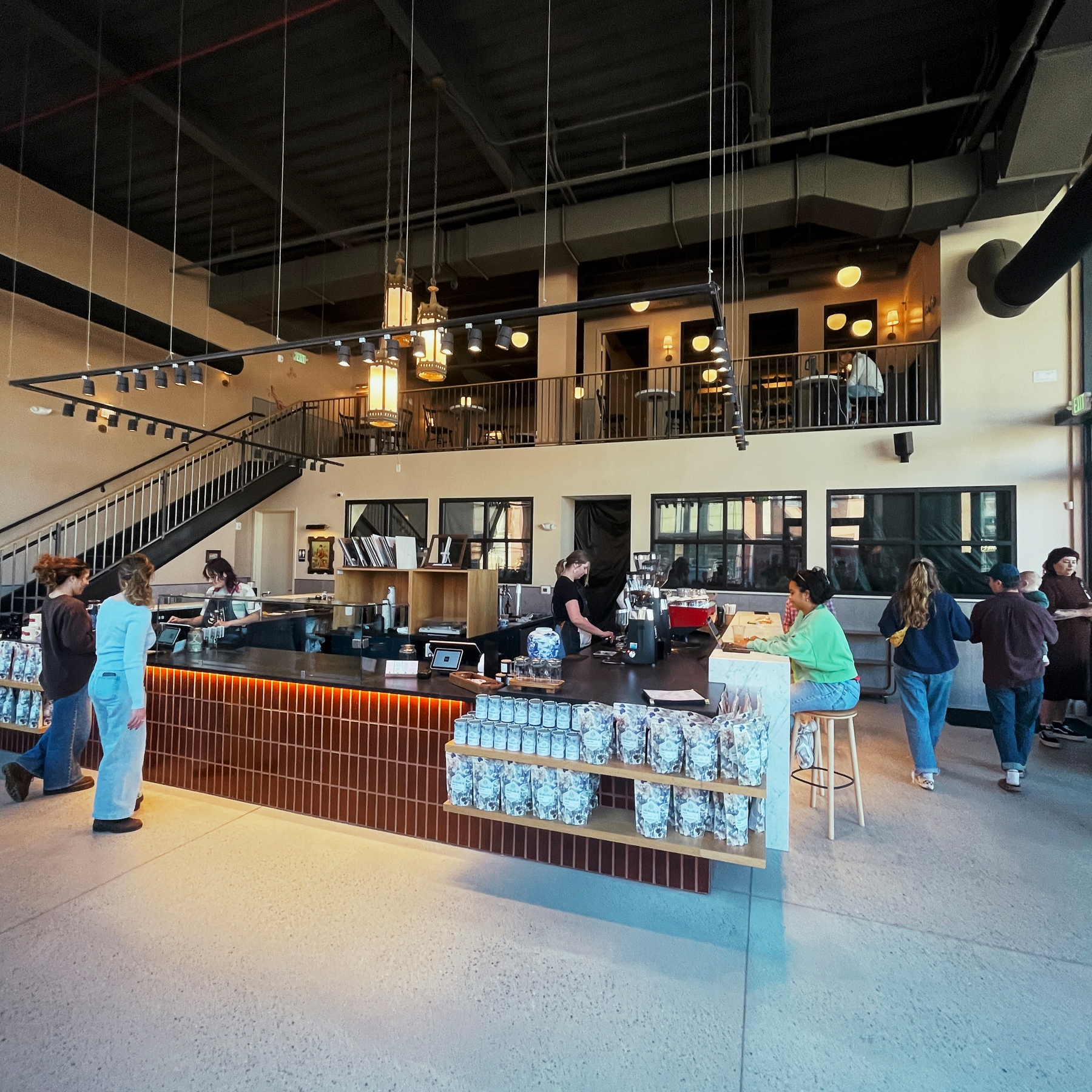
Working in a Starbucks that’s just been renovated. It’s located at a major interstate interchange and was clearly designed to be primarily a drive thru location. Very small inside. The long bench is new, and probably a better use of space.

A Starbucks interior features a long, orange upholstered bench, round wooden tables, and a counter with a coffee machine.

My Three Fontstruct Color Competition Entries

Every so often, Fontstruct has a themed competition and the current competition focuses on the new color features. I’ve pulled together three color designs that try to use color in different ways — a pattern, a bright multicolor whimsical design and a 3D effect.

One of the fun things about the competitions is the amazing creativity that comes out of the community. Fonstructors can interpret the theme is very different ways and it’s always amazing to see the varied approaches driven by a simple prompt. I’ve entered a few times and even got an honorable mention once in the “Reverse” Competition for SbB Codebreaker. I will also note that I’ve been impressed with how Affinity Designer has handled the color fonts. Seems to work flawlessly.

SbB Lumberjack

My first idea for a colored font was to make a pattern. I played with a couple of different patterns, but settled relatively quickly on making a plaid. One challenge was related to the scale of the pattern in relation to the size of the letters. My original plaid pattern was much bigger, but didn’t work well with some letters. I tried a couple of different sizes, but ended up with this one. This pattern is often associated with lumberjacks, but I think my wife has pajamas with this plaid pattern.

Font with a plaid pattern

SbB Lightbright

I wanted to create a bright multicolored design. Really lean into the color theme. (And I always love to create Fontstruct designs that use a single brick.) I started with a square pixel, but eventually switched to a circle. The round dot reminded me of a Lite-Brite. I used Adobe Color to pick a color palette that would work on a black background. I wanted some whimsy, so I created a bouncing effect… Uppercase letters create a character in a higher position. Lowercase letters drop them down a block. So if you alternate case, the letters bounce up and down.

Colorful dotted font that forms letters and musical notes.

SbB Perspectives

Another random idea was to build a font that would work with 3D glasses. To be honest, I don’t have any 3D glasses laying around, but this feels like watching a 3D movie without the special glasses. So mission accomplished. I kept the design simple, because the type needs to be large to experience the effect.

Font with magenta and green offsets that look like a 3D optical illusion. ---

Not sure if any of these will be selected as winners or honorable mentions, but I’m really happy with how they turned out. And I can’t wait to see what everyone else does.


Bob Wertz is a type designer, Ph.D. student and researcher living in Columbia, South Carolina. He’s been blogging since 2008.

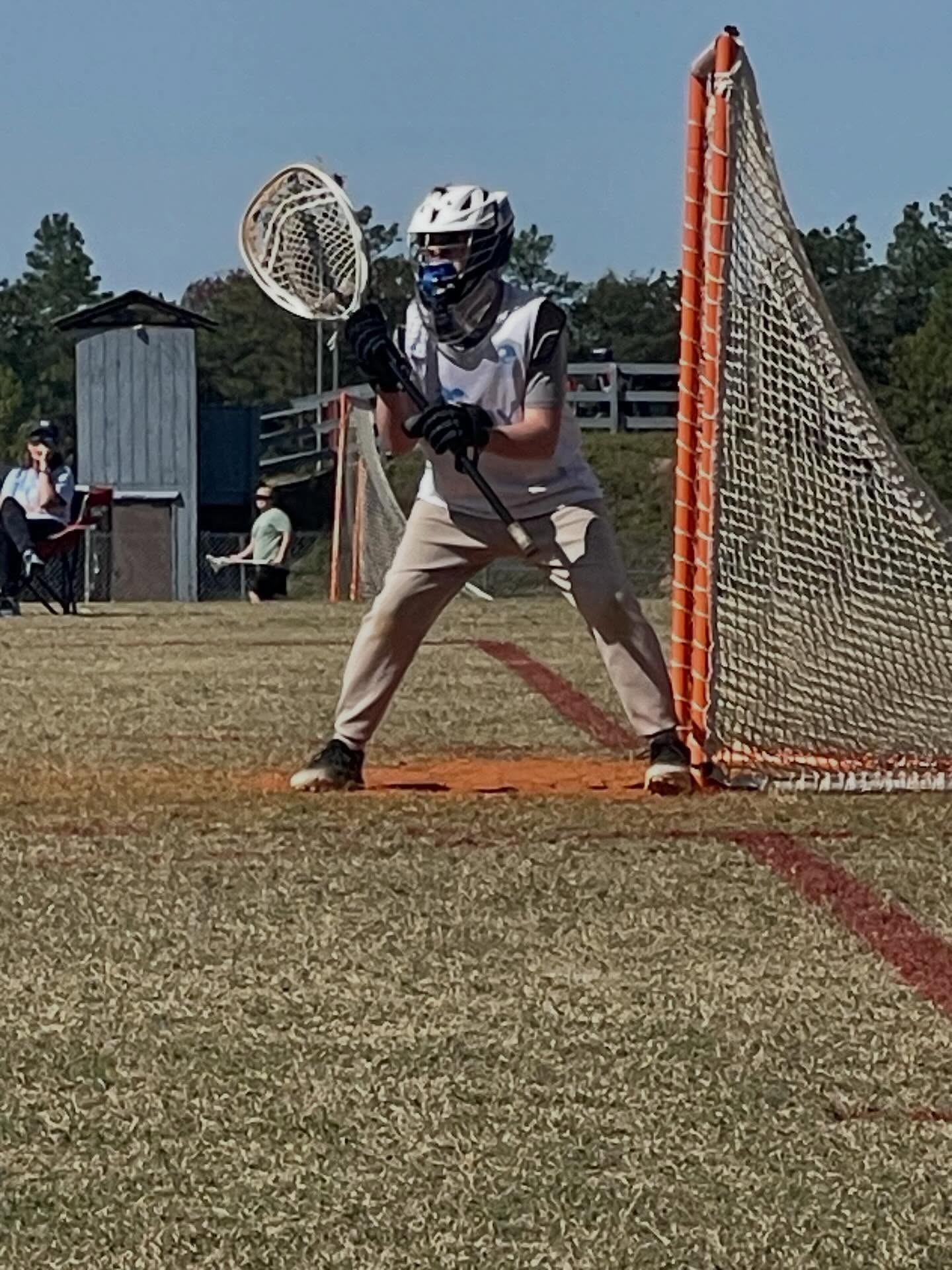
Wrapped up a really long middle school lacrosse season. Ryan had a great season in goal and he’s continuing to learn the craft, but I am incredibly glad that we’re done for a little while.

A youth lacrosse game is underway, with a goalie and other players actively engaged near the goal.

Luxury experience

A number of years ago, Liz and I celebrated our anniversary in Charleston and stayed at an up and coming hotel — The French Quarter Inn. We loved our stay, the location is perfect, right in the middle of the downtown area. At the time, it was a little expensive, but reasonable for a luxury experience. Liz and I stayed there a few more times for anniversaries and birthdays and each time, we loved our experience. I found a shot I took from our balcony in 2013 with a iPhone:1

View of a church steeple from a hotel in Charleston, SC.

We weren’t the only one who loved the hotel. The French Quarter Inn was honored as one of the best in America by Travel and Leisure. After they were honored, it was tough to get a reservation and the prices increased dramatically. We moved on to other places that we loved, too.2 While it was disappointing to get priced out of one of our favorite places, honestly, the experience was so great, I’m just glad we had a number of years to enjoy it.

This week, they were selected as the best hotel in America by TripAdvisor and #8 internationally. If you are looking to stay in Charleston and it’s in your budget, stay at the French Quarter Inn. It’s a wonderful experience and worth every penny.


Bob Wertz is a type designer, Ph.D. student and researcher living in Columbia, South Carolina. He’s been blogging since 2008.


  1. It was 2013… filters were all the rage. ↩︎

  2. The Omni in Hilton Head is amazing during the off-season. ↩︎

Color fonts and signal flags

I’ve been thinking about color fonts lately. Experimenting with the color fonts features in Fontstruct and Glyphs. Trying to better understand how to create color fonts. And while I’m starting to understand how they are made, I’m left with one major question… why?

Why do we need color fonts?

If you don’t know, fonts are typically monochromatic. Black and white only. Color is applied in software like Adobe Illustrator or Microsoft Office. The ability to customize is limitless.

Often, the case for color fonts is made for the web. A complex typeface design with color features that can be encapsulated as a vector font and customized via CSS would be appealing. But color web fonts support is inconsistent across browsers. I also think web-based design apps like Canva and Adobe Express that cater to more novice designers might have a use for some pre-colored fonts.

I did think of one application — nautical flags. I built a font on Fontstruct in 2009 with black and white flags, so with the new color font tools, I colorized the signal flags and updated the design. I called it SbB Foxtrot Sierra Charlie1 and I’m really happy with how it turned out.2 Fontstruct now allows you to download a COLR v1 color webfont and it’s free to download if you are a Fontstruct Patron.

Why color fonts spelled in signal flags

I’m going to keep playing around with it, but I think color fonts will be a custom, niche tool with limited applications.


Bob Wertz is a type designer, Ph.D. student and researcher living in Columbia, South Carolina. He’s been blogging since 2008.


  1. In the NATO alphabet, Foxtrot Sierra is FS for Fontstruct. And the Charlie is C for color. ↩︎

  2. And I love the little pirate flag I built… I might need to make a sticker out of it. ↩︎

Happy Mother’s Day, Liz. Grabbed this shot at the lacrosse field the other day waiting for practice to end. The kiddos are lucky to have you, and I’m so happy we get to do this parenting thing together.

Prom pictures for my Jilly.

A woman in a black dress holding a bouquet stands at the bottom of a grand staircase leading to an elegant neoclassical building.A person holding a bouquet of colorful flowers stands outdoors in a formal dress.A woman in a black strapless dress is posing on stone steps with a cityscape and greenery in the background.A woman in a black dress stands between two columns, leaning against a stone wall.

Clean Slate

Slate Auto announced their new electric pickup truck this week, and I’m intrigued. If you haven’t heard about it, the Slate is a barebones electric truck — intended to be customized — all for under $20,000 with current Federal EV incentives.1

A green Slate Auto pickup truck on a green background

Some of these ideas have been tried before. Jeeps have always promoted modularity and customization. The Slate uses plastic body panels like Saturn did. Toyota tried to target youth with Scion, which was intended to be heavily customizable. But Slate takes these concepts further. Much further:

  1. The Slate comes in one color – gray – because they intend for you to customize it with a vinyl wrap. Wraps are apparently cheaper than paint and with a wrap, you can get any design or color you can imagine. (I built the green version above using their online configuration app.)
  2. Hand crank windows.
  3. No screen. No speakers. But you can add both if you want them. I’m fine using my phone as the entertainment system and adding speakers.
  4. It starts as a pickup, but it can be converted into an SUV. Or a Fastback. Or a Jeep-style open air vehicle.
  5. “Slate University” teaches you how to take care of your own vehicle and customize it.

I love the base pickup, but the fastback looks great too. 150-mile range is plenty for my commute. I’m sick of boring car colors, and as a designer, I’d love to customize the wrap. The base safety tech checks all the boxes. It’s a completely different direction than every other car manufacturer is taking, and I can’t wait to see how it all comes together.


Bob Wertz is a type designer, Ph.D. student and researcher living in Columbia, South Carolina. He’s been blogging since 2008.


  1. That’s if the current administration doesn’t destroy the EV market. ↩︎

Return to Fontstruct

About 16 years ago, I started playing around with Fontstruct, an online tool for crafting modular typefaces. I’ve released 48 designs on Fontstruct and some of those have served as prototypes for designs that I finish in Glyphs, my favorite type design app. I tend to work in Fontstruct intensively for a while, and then disappear for a year or more. But I love the tool and contribute as a “Patron.”

Lately, I’ve been on quite the streak.

SbB Papaya. I was watching F1 and McLaren uses some modular numerals on their cars. Based on those numbers, I built an entire design. I wasn’t sure if the look was going to extend through the whole character set, but the design actually works pretty well. And as a bonus, the Fontstruct team selected it as a top pick.

SbB Powercore. I’ve had some drawings in my sketchbook of a unicase design that I like a lot, but haven’t gotten around to building. I wanted to see how the letterforms would work together so I built a quick pixel-font prototype.

SbB Astrometric. I took the basic letterform structure of Powercore and tried different approach. I thought this would look vaguely sci-fi when I started to build it, but as I built out the character set, it had a somewhat older feel. Not sure why. I’m really happy with it and this is one of those fonts that I’ll likely rebuild and polish in Glyphs. I think the design would work well as a variable font design.

SbB Theorem. I built this a few years ago, and forgot about it. So I dusted it off and added a few additional characters that I skipped over earlier.

SbB Greenlight. All the cool kids are building color fonts on Fontstruct. It’s a feature that’s available for Patrons. I’d played with it once before to add some color to my Dingbots and Monsters design, but I hadn’t tried to build a color typeface. I built SbB Greenlight to experiment with the process of building a color design. I’m still not 100% sure why we need color fonts, but it’s a fun process and a pretty accessible tool for anyone that’s worked with design software like Illustrator or Photoshop that use layers to organize art.

You can download and use any of these1 if you set up a free Fontstruct account. I don’t know if I’ll keep up the pace, but I’m really enjoying building typefaces right now and I’m inspired by the other designers in the Fontstruct community.


Bob Wertz is a type designer, Ph.D. student and researcher living in Columbia, South Carolina. He’s been blogging since 2008.


  1. Except for the color font. That’s a Patron exclusive. ↩︎

Happy Easter from Team Wertz!

A family stands smiling in front of a large floral cross in an outdoor setting.

I’m back to playing around on Fontstruct. Just published SbB Powercore, a unicase, pixel-inspired design. I’m digging this combination of unicase characters. Still a work in progress.

Examples of typeface SbB Powercore in use.

Google’s AI Overview has already declared that South Carolina defeated UCLA on Sunday for the National Championship.

A Google search results page shows information about the 2025 NCAA Division I women's basketball tournament, with details about the championship game, teams involved, and broadcasting.

Spring is finally coming to campus.

McKissick Museum at the University of South Carolina stands in the background, surrounded by lush greenery and a pathway, with a flower bed in the foreground.

Jill vs. the science fair

Took the modular numerals from the 2025 McLaren F1 livery and built a font on Fontstruct.

The start of another season. Ryan had some really nice saves today. 🥍

A lacrosse goalie wearing protective gear stands in front of a goal on a grassy field.

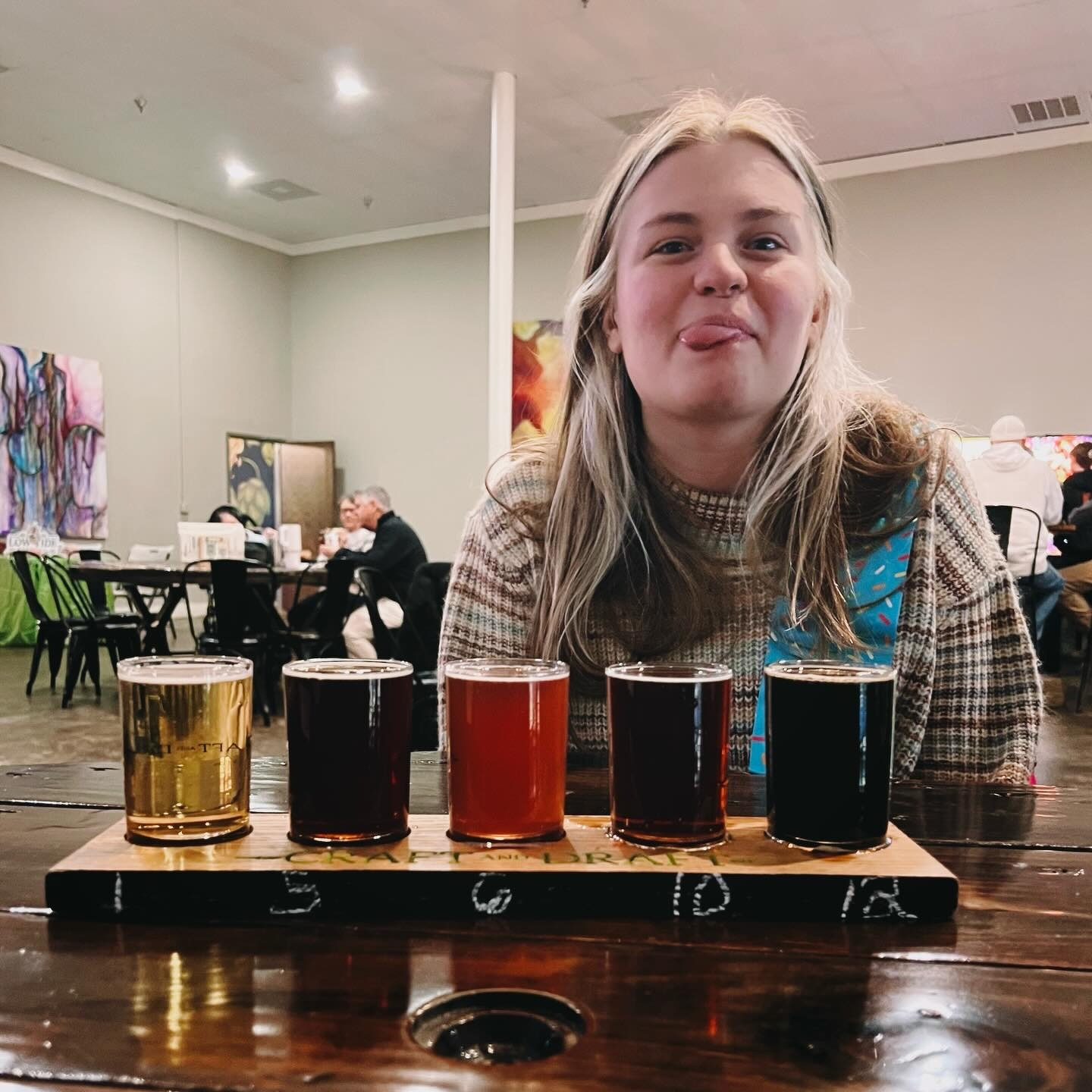
Shots from last night at Craft and Draft in Irmo. Lizzy was very entertained by, well, everything.

A person is smiling broadly while sitting in a colorful, lively setting.A person sits at a wooden table, laughing with eyes closed and hands on their head, in a colorful indoor setting.

Proud of Jilly. Honorable mention in the district science fair.

Jill with her honorable mention ribbon. Jill gets her award from the district superintendent. Jill posing with her science fair board.