I don’t have an issue with the concept of AI, but especially with imagery, how you train the model matters. The most popular generative systems were trained on copyrighted material and that’s a problem.
A good week for South Carolina basketball. The men beat Kentucky. The women beat LSU on the road to remain unbeaten. 🏀
More than 30 years ago, I used a Mac for the first time in high school and was instantly hooked. I finally saved up enough money to purchase my first Mac my sophomore year in college. A Power Mac 7500 that I used for a very long time until I bought an iMac. Happy birthday, Macintosh.
So I’m working my full-time job, taking a class and teaching a lecture class this semester. I’ve got a pretty good plan for managing my time, but every so often, I wake up at 1:30 with an idea in my head and end up working for a couple of hours in the middle of the night.
It’s easy to miss the feeling of a monoculture if you grew up with it. Hits gave us something to talk about, adhere to or even work against. There are so many pockets of culture, it can’t help but feel a bit more lonely from a certain angle.
I might also add: It’s easy to miss the feeling of the early web if you grew up with it.
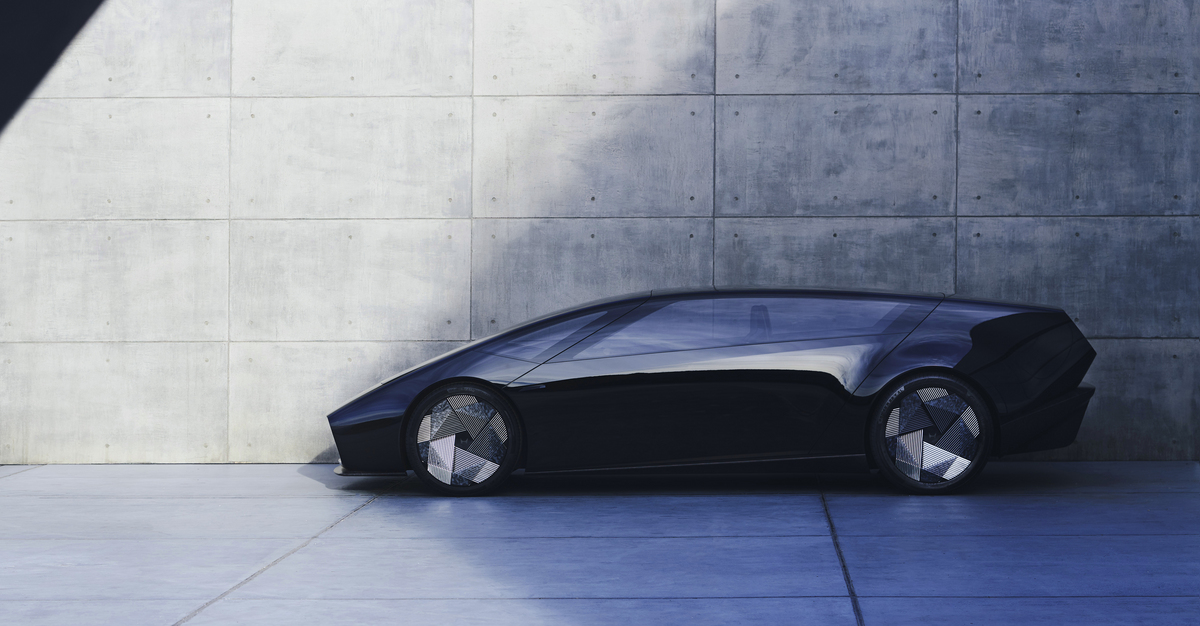
Honda showed off two new EV concepts under the new Honda Zero brand at CES — the Saloon and the Space-Hub. Most of the coverage is focused on the futuristic looks of the concept cars. As someone who grew up going to the Chicago Auto Show and seeing the cars of the future, I’d temper any expectations that the final designs will be this radical.
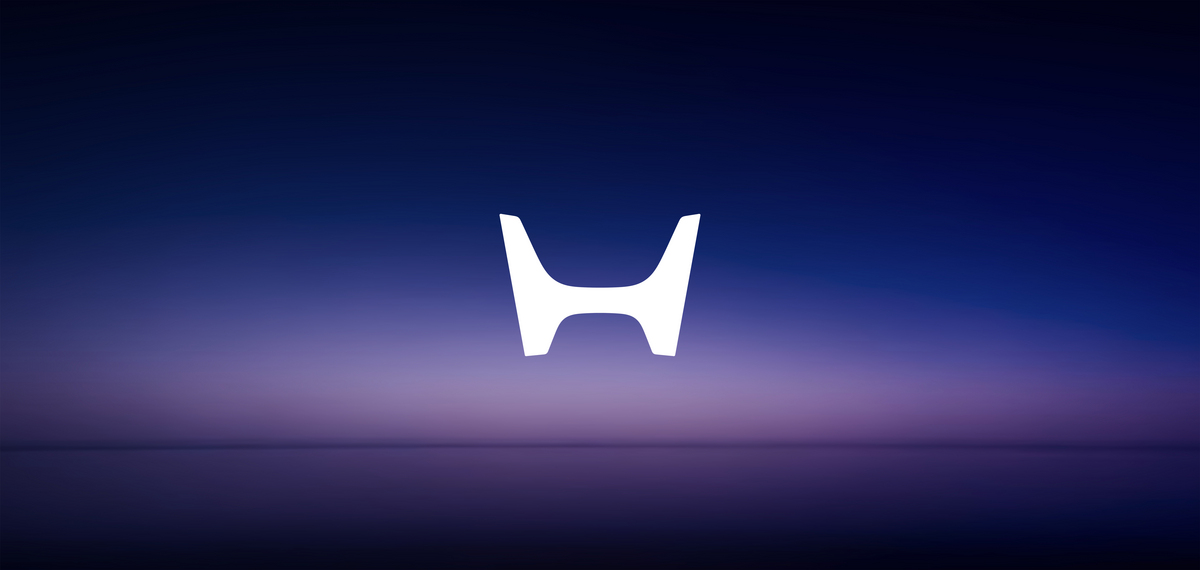
The current Honda “H mark” has a long history, dating back to 1981. In launching the next-generation EVs, Honda designed a new H mark, to express the company’s determination to undergo a historic transformation as well as the ability to constantly pursue new challenges and advancements. This new design expression, which symbolizes two outstretched hands, represents Honda’s commitment to expand the possibilities of mobility and continue to meet the needs of its customers. The new H mark will be applied on future Honda EV models, including the Honda 0 Series.
The logo simplifies Honda’s current H, removing the outer bounding box and reshaping the mark. It does feel like a more modern mark and seems appropriate on the futuristic vehicles. As logo introductions go, this might be the slowest roll out in the history of visual branding since the first Honda Zero cars won’t be released until 2026. And since the logo is intended for just electric vehicles, that means that Honda is choosing to fragment their brand for a period of time.
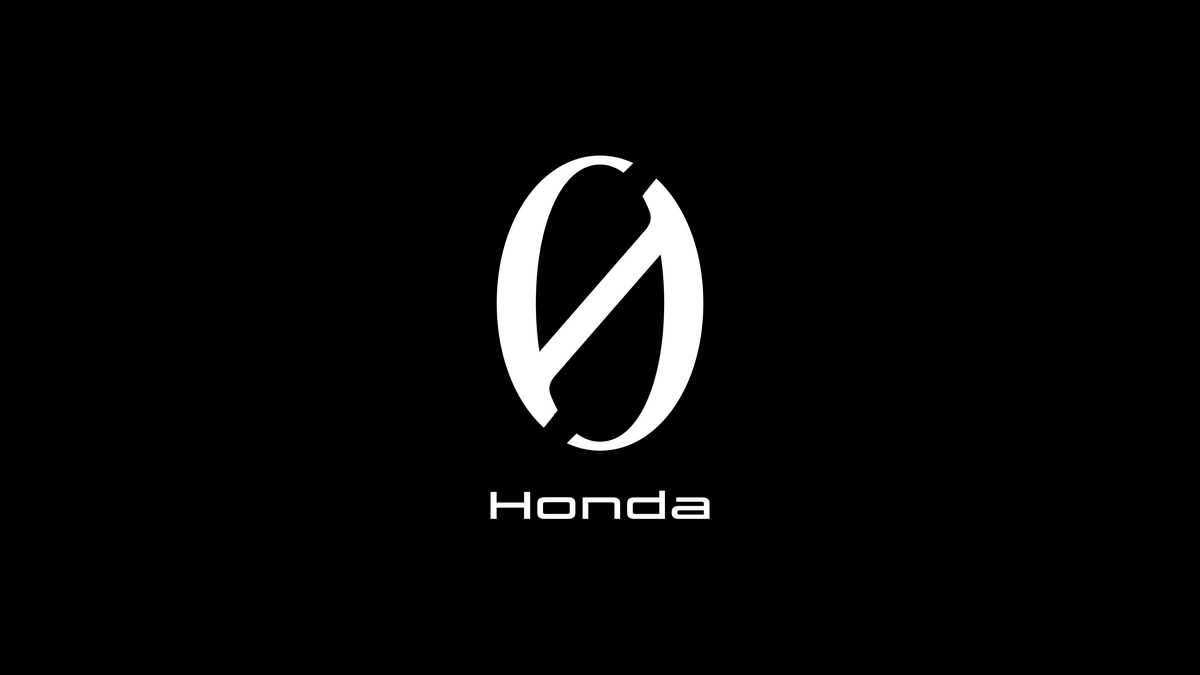
It’s worth noting that the Honda Zero brand had its own mark at introduction. I’d be surprised if this is used in marketing when the models debut in 2026. I’m not sure what’s going on here, since the elements don’t really match anything.
Electric car branding is fascinating to me. VW and BMW add a letter or letters to the model number. Hyundai is using the Ioniq brand name for most, but not all of their EVs. Many vendors are rolling out EVs alongside their internal combustion engine lineup. VW is resurrecting the old Scout brand for a line of electric SUVs.1 But to my knowledge, Honda is the first company to create a version of their corporate logo especially for electric vehicles. As the transition to electric vehicles continues, it will be interesting to see how EV branding continues to shift and evolve.
Bob Wertz is a creative director, type designer, Ph.D. student and researcher living in Columbia, South Carolina.
Scout SUVs will be manufactured just north of my hometown – Columbia, South Carolina. ↩︎
The user experience for setting up a kid’s account on most services is terrible… I understand why people just set up normal accounts for their kids and type in fake birthdates. It’s frustrating.
Over the holiday, I had to search on Google for some obituaries and I’ve learned there are tons of sites that scrap obituaries, funeral home sites and social media and then flood Google results with AI-generated, ad-covered garbage.
Both of the textbooks I need for the class I’m taking this semester are available as ebooks, but my options are Kindle or a proprietary publisher owned system. Of course, I can read them on my computer, but now I’m pondering buying a Kindle.
I adopt a theme each year and last year, the theme was Reset. That theme included focusing on physical and mental health, writing more, getting organized and rediscovering creative endeavors. I made progress with three out of four goals.
I wrote more, getting my first journal article published and I have several others in the works. I’ve written more here on Micro.Blog in 2023. So mission accomplished.
I did a good job getting organized, but I need to stay organized. There are still some areas I need to work on, but I feel like I made some progress.
I worked on a bunch of my typeface designs and even though I’m not ready to release anything, I feel like I was able to dedicate some time to visual projects.
That leaves physical and mental health. I was particularly physically active for the first few months of the year, but hit a rough spot around April and lost momentum. I never got back in a rhythm.
This year, more of the same
As I started to plan for 2024, I felt like my focus was going to be solely on health. I felt great at the beginning of 2023 when I was more physically active, and I definitely want to get back to that level of activity. Combine that with processing the unexpected death of a coworker a few days ago — who was younger than I am — and I’m solidly committed to getting healthier in 2024.
But as I read over the list of my goals from last year, I still see room to improve in those areas, too. I’m still working on my Ph.D. and carving out time to write is critical. I still need to work on personal organization. And I need to work on creative projects — especially getting into a routine with my sketchbook.
So I go into 2024 with four goals… basically the same goals that I had last year:
Get healthy. I’m not trying to run any races or achieve some incredible physical feat, but I do need to eat healthier and make time for physical activity. This is, without a doubt, my number one priority.
Write more. Continue to write here, and work toward my Ph.D.
Get organized and stay organized. Continue to refine and evolve my methods and tools for staying organized.
Explore creative endeavors. Keep working on typefaces, but also, get back into the habit of sketching regularly.
I’ve got a lot to be excited about in 2024, including my 25th wedding anniversary in August. I’m looking forward to a healthy and productive year.
Bob Wertz is a creative director, type designer, Ph.D. student and researcher living in Columbia, South Carolina.
Got word a couple of days ago that a coworker of mine passed away unexpectedly. She’s got two young kids. Just devastated for the family.
It’s Christmas Eve and two of the presents we ordered haven’t arrived. One is scheduled to arrive Dec. 26. The other one hasn’t shipped.
There are some interesting ideas for reform in this article. I was especially interested in the idea that maybe the House of Representatives needs to be significantly larger.
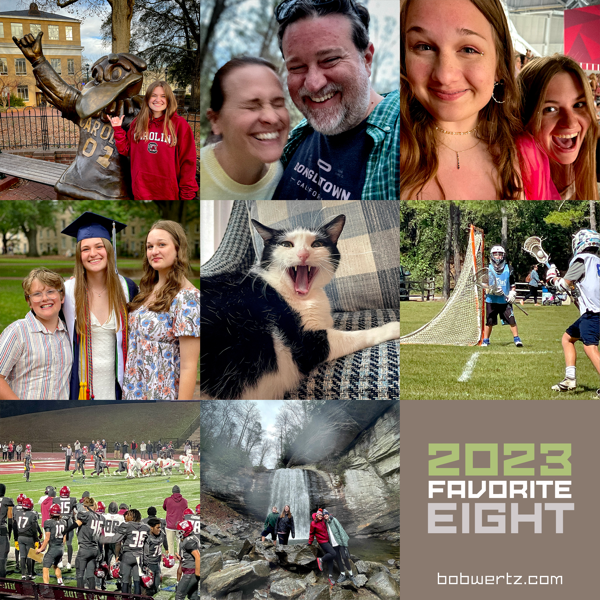
I always pull together my favorite eight shots of the year (as a contrast to those algorithmically generated “Best Nine” posts). I love that it gives me an excuse to go back over all of my images from the last year and relive a lot of great memories.
Our oldest decided to attend the University of South Carolina and had a great first semester.
Liz and I are notably bad a selfies, but this outtake was better than the actual selfie and I love it.
The girls were a little excited about seeing Taylor Swift in concert. (It was an amazing concert and I’m glad we all got to go.)
We have a high school graduate.
This is a big kitty yawn, but it looks so fierce.
Ryan is still playing lacrosse and bounced back after some adversity this summer to have a great rec season.
We attended my nephew’s football playoff games. This was the final play in overtime that sent them to the state championship. They won that game, and won a state championship.
Birthday hike for my oldest included a stop at Looking Glass Falls in Pisgah National Forest. It was so cold, that the rocks were covered with ice.
This is the fifth year I’ve done a Favorite 8. You can see my previous posts from 2018, 2019, 2020 and 2021 on my other site, Sketchbook B. And I posted my 2022 here on bobwertz.com.
Bob Wertz is a creative director, type designer, Ph.D. student and researcher living in Columbia, South Carolina.
I was thinking about buying my middle child a non-smartphone camera for her to experiment with. She loves taking pictures and has a great eye. I looked at what’s available and realized that the market only offers really cheaply-made cameras, or really expensive cameras. Virtually nothing in between.
Woke up this morning to low water pressure. Turns out a water main at the front of our neighborhood burst overnight…
Now the worm is back. And the meatball is still there too, still the official insignia for NASA.
Enjoyed this article about the two NASA logos. As designers, we typically preach consistency. But in this case, having two logos seems to work.
Had my last in-person class of the semester this morning. It might be my last in-person class of my PhD program. I have mostly independent studies, online classes and my dissertation to go. I’m a part-time student, so I still have a couple of years left, but it seems like some sort of a milestone.
Every Sunday afternoon after a shift change, the music at this coffee shop switches to 100% Taylor Swift. My daughter and I call it the Taylor Shift.