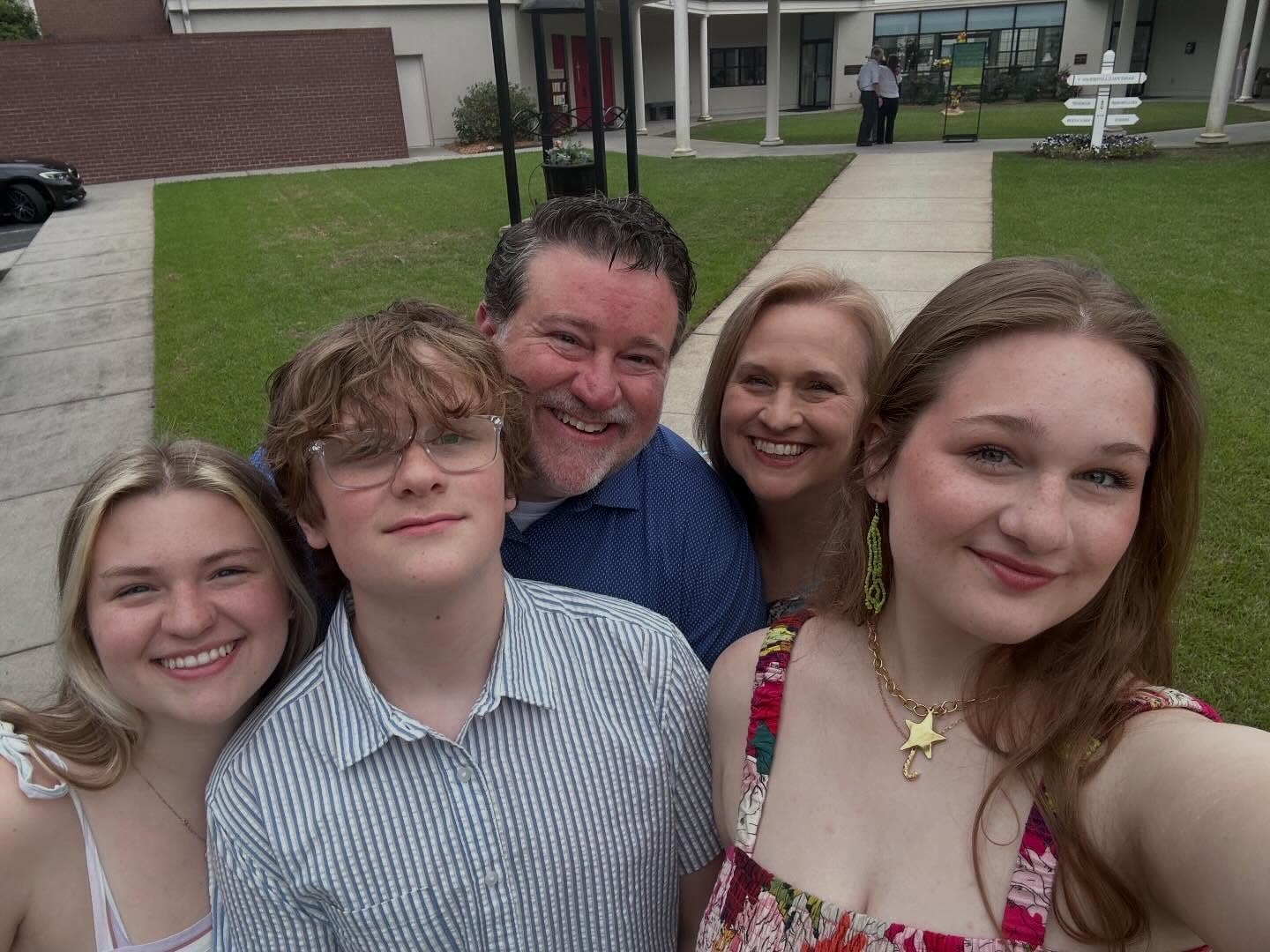
Happy Easter from Team Wertz. Always wonderful to worship at St. Paul Aiken when we are in town.
Go Gamecocks!!!! 🏀
Spring is here. I looked up while grilling and noticed our backyard trees are finally all green again. 🍃🍃🍃
Ryan got his first high school start tonight when the starting goalie injured his hand in warm ups. He got the win and a shut out.
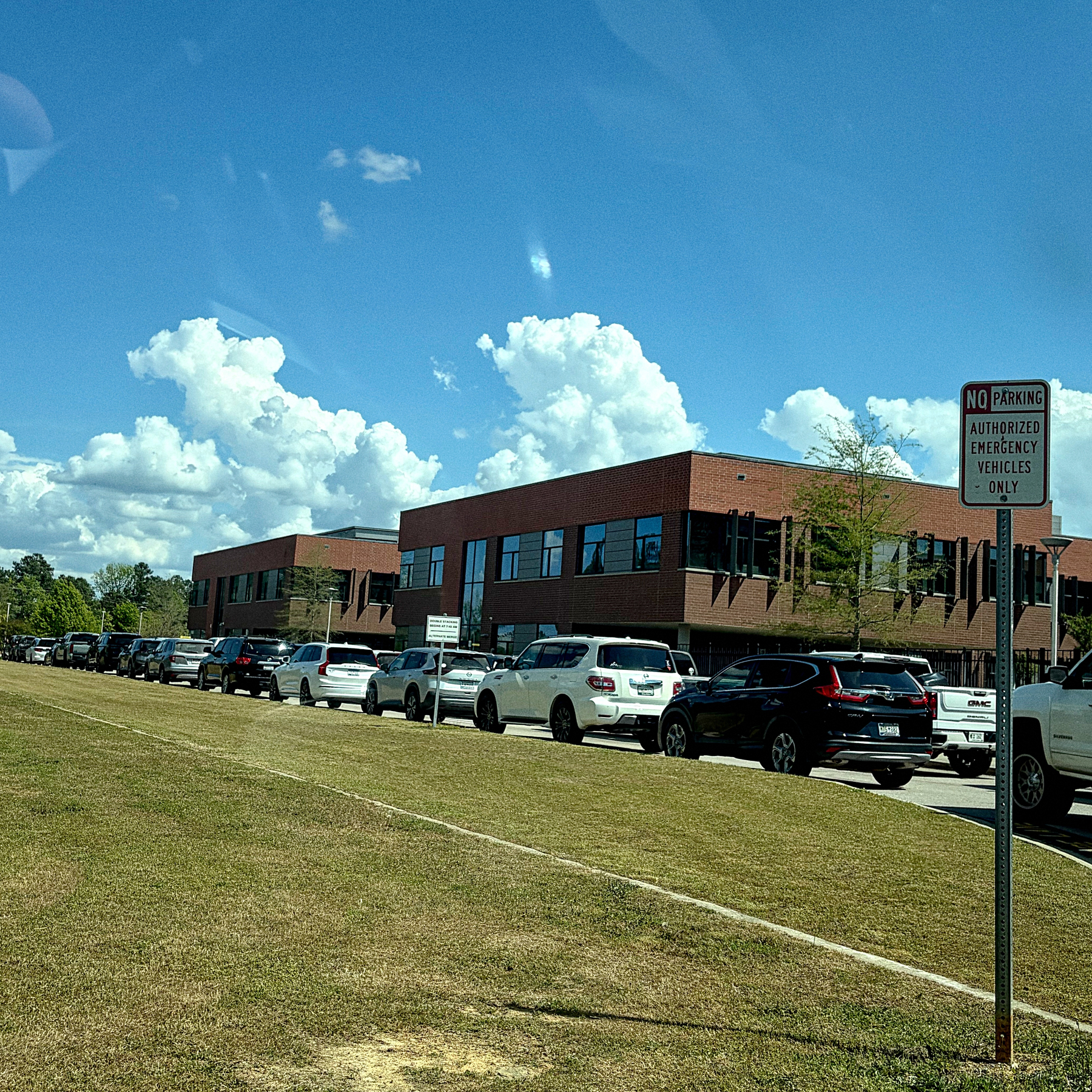
Bored, while sitting in a very long middle school car line. (I’m near the front.)
The South Carolina Women’s Basketball team is so impressive. Strong win against Oklahoma today. Ta’Niya, Raven and Tessa shot the lights out, scoring 60 of the team’s 94. Looking forward to the next game against TCU or Virginia. Go Gamecocks. 🐓🏀
Apple seems to be one of the most tightly managed brands in the world, but they actually use their logo much more whimsically than any other big brands. I’ve written in the past about logo usagethat runs against typical brand management best practices. On the eve of their 50th anniversary, I’ve come across two more examples. I wanted to share them as a way to continue to document Apple’s approach to visual identity:
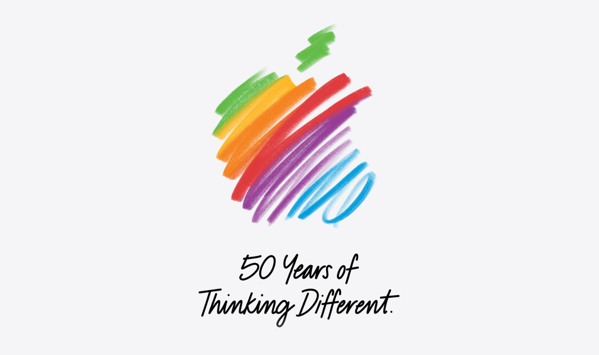
The 50th Anniversary “Logo”
Apple has artwork that essentially serves as an alternate logo for their anniversary. It’s a stylized treatment of their logo (below), which includes a rainbow of colors that harkens back to their old six color rainbow logo.
Both examples take the Apple logo shape and use it as a structure for artwork. You typically don’t see large companies allowing or promoting this kind of variability with their logo. And you rarely see an old logo pop up, even during an anniversary. The artwork feels true to the Apple brand, but runs counter to what other brands do. In brand management, rigid consistency is king. As designers, it’s worth noting that Apple of all companies allows such flexibility within their visual identity guidelines, and maybe we can learn something from how they use their logo and brand creatively.
Bob Wertz is a type designer, Ph.D. student and researcher living in Columbia, South Carolina. He’s been blogging since 2008.
The parking garage is so eerily empty when I get in early.
I’ve been impressed by Kagi News. A nice AI-curated summary of important news stories, updated once a day. Provides links to a spectrum of sources, and the site has an RSS feed, so I can easily add it to Feedbin.
Coffee shops should all have a rack of reading glasses for sale. I occasionally forget mine when I go to write or study, and I would completely pay an inflated price for a pair of reading glasses in the moment. I can’t be the only one. I think they’d make a nice profit.
Working at the Starbucks at I-26 and Broad River in Irmo tonight while Ryan is at lacrosse practice. I studied here all the time when I first started grad school. Happy to report that almost a decade after I nicknamed it “Grad School Starbucks” that it is still full of grad students.
I don’t go into Facebook often, but when I do, I’m flooded with fake AI generated stories about Gamecock Women’s Basketball and F1. Judging from the engagement on these posts, lots of people believe them… but most of them are completely made up.
Interesting observation by Nilay and David on the Vergecast last week about the MacBook Neo. For most people, their most essential computer is their phone. A MacBook Neo is an affordable second device targeted at phone-first consumers.
It’s going to be tough to be a McLaren fan this season. 🏎️
The process of finding a roommate for the first year of college in 2026 is a mix of dating app and Instagram stalking. 🤣 My middle child is looking for a South Carolina Honors College roomie…
I thoroughly enjoyed Star Trek: Starfleet Academy Season 1 from start to finish. Some great new characters. I like how they’ve continued to build out the technology and culture of the 32nd century. I’m looking forward to season 2.🍿
I have three kids — one in college, a senior in high school and a middle schooler. They’ve grown up in a school district where they’ve had their own Chromebooks for the majority of their education. They use Google Docs and Slides, plus a host of online tools like Canva. Chromebooks dominate the K-12 education market, but once they graduate, what do they use?
When my oldest went off to college, we purchased an M2 MacBook Air and that’s been the computer that she’s used for the last three years. It’s a great computer, but honestly, it was far more powerful than she needed.
When my senior in high school heads to college in the fall, she’ll be taking a MacBook Neo1. It’s the perfect computer for what she needs, and a massive step up from the crappy Chromebooks that she’s used for the last decade.
Kids raised with Chromebooks are comfortable with the laptop form factor, and the MacBook Neo is a nice step up for kids heading to college. Affordable, and as a bonus, it works well with the iPhone they likely already have. I expect that next year across campus, most of the computers I’m going to see will be MacBook Neos. It’s a computer made for college campuses.
Bob Wertz is a type designer, Ph.D. student and researcher living in Columbia, South Carolina. He’s been blogging since 2008.