Columbia
Posts about my hometown of Columbia, South Carolina
8/29/26 • 3 min read
In South Carolina, there are plenty of N.I.M.B.Y.s. People who understand the need for affordable housing or some other government project and support the project, as long as it’s “Not In My Back Yard.” Opposition is usually centered on property values or traffic congestion.
I’ve lately seen something a little different. A new type of N.I.M.B.Y. —
“NOTHING In My Back Yard.”
South Carolina is the fastest growing state in the nation and development is coming to the entire state, especially suburban and rural areas. These new developments are being met with intense pushback by MAGA Republicans who want to freeze ALL development. Even responsible development. Two select examples from my county:
- The Town of Irmo has approved a large mixed-use development. They’ve taken their time and worked with the developer to address concerns about schools, traffic and services. It’s a mix of premium housing and retail, with a section dedicated to senior living. Pushback has been intense, including several lawsuits. But after a year or so, the town council has approved the development.
- The Town of Chapin is imploding over the development of neighborhood just outside of city limits. There is a contract signed by a previous council to supply water service to this area, but the new mayor is refusing to provide water service to these new developments. The council is trying to limit the mayor’s power, and the county is suing the town for breach of contract. (This is a quick summary. The actual situation is truly insane and more complicated.) These are premium homes by an award winning developer, but from the comments on social media from residents, you’d think they were building a data center.
These are far from the only examples. For these people, NO development would be appropriate. Vacant lots should stay vacant. They are terrified of any change. Even potentially positive change.
I’d classify most conservatives in South Carolina as fiscal conservatives. They want to encourage economic development and build the tax base, so they can continue to lower taxes. But these MAGA conservatives are different. They want all growth to stop. They claim to be ultra capitalists, but then want to control development. In South Carolina at least, the fiscal conservatives seem to be losing patience with the MAGA conservatives and pushing development forward.
Bob Wertz is a type designer, Ph.D. student and researcher living in Columbia, South Carolina. He’s been blogging since 2008, never writes about politics, and will probably regret this post.
1/13/26 • 3 min read
I enjoyed this article in the NY Times about the sadness that you feel when your favorite restaurant closes.
Every restaurant is a portal — a way to remember who you were and how things felt when you were, say, 19, or 27, or 35, but also to remember the particulars of a city, a neighborhood, a block.
I started to think about the restaurants that I’ve loved that are no longer open. I started with a longer list, but here are three that I really miss:
The West Side Bowery
Aiken, South Carolina
Closed in 2013 after a 32-year run
There weren’t many nice restaurants in Aiken when I lived there. The Bowery wasn’t exactly upscale, but the food was great. We didn’t go often when I was in high school, but I did go there for dinner before my junior and senior prom. My connection to the Bowery grew over time, though. My wife, Liz, was a waitress at the Bowery, working there in high school and then every summer when she was home from college. She’d always work the slow shift between lunch and dinner, and I’d stop by to visit her when we were dating. They catered our wedding and whenever we’d roll through town, we’d stop to grab a bite and say hi to the owners. Whenever I go to Aiken, I have to urge to stop by the Bowery, but sadly, it’s a Mellow Mushroom now.
My go to order was a Pepper Jack Steak Sandwich with fries and a sweet tea.
Birds on a Wire
Columbia, South Carolina
Closed in 2009, after a 15-year run
My first job after college was on Devine Street, walking distance from Birds on a Wire. We ate there frequently and the office would sometimes ordering catering. The whole menu was fabulous, but the rotisserie chicken was the star. Just phenomenal. It eventually moved to a new location and was sold to different owners, who couldn’t keep it going and declared bankruptcy. When Liz and I first got married, we lived in the neighborhood and would get take out from Birds frequently. They even catered Liz’s graduation party when she earned her Master’s degree. I still tell people about how great the pulled chicken was…
My go to order was 6 oz. Pulled Chicken with Hoppin’ John, Baked Potato Wedges, and sweet black bread.
Yesterdays
Columbia, South Carolina
Closed in 2020 after a 43-year run
When my brother started college at USC, we would drive up to visit him and often ate at Yesterdays in the middle of Five Points. When I started college, my photojournalism professor, Don Wooley, held his office hours at the Yesterdays’ bar. The menu featured southern favorites and there was always something for everyone. Over the years, we had lots of family dinners there when people were in town. After Liz and I got married, we’d order take out. We did get to take our kids there several times. (They loved the fish tanks.) There are plenty of other places that I can get Southern comfort food, but aren’t nearly as nostalgic.
My go to order was County Fried Steak, but I ordered lots of different stuff off the menu including some fabulous chicken nachos.
Bob Wertz is a type designer, Ph.D. student and researcher living in Columbia, South Carolina. He’s been blogging since 2008.
1/3/26 →
Even though it rained earlier, we got out to Gather Columbia late this afternoon. Lots of great food options. Fun atmosphere. Another cool addition to Columbia.


12/23/25 →
The renovated Finlay Park in Columbia is gorgeous. They did such a great job with the update and it’s now such a vibrant space for the community. Love it.

10/25/25 →
Finally made it to City Limits Barbeque. Even with all the hype, it exceeded my expectations. Outstanding.
10/24/25 →
Impressed with the new Methodical Coffee in The Bull Street District in Columbia. Really awesome to see this area finally coming together.

9/5/25 →
Scout Motors partnered with local coffee shops to buy coffee for Columbia today. Pretty cool event, and we are happy to have Scout in our community. Thanks for the free drink today! (And the stickers.)

7/5/25 →
Fireflies baseball. A beautiful night to catch a minor league game.

3/9/25 • 3 min read
Back in 2016, I had a blog about retail developments in the Columbia, South Carolina area. And one of the most popular topics was why there wasn’t an Apple Store in Columbia.
Yesterday I was at Columbiana Mall and realized that the large Forever 21 is closing. I’m always interested in Apple Store-sized vacancies in Columbia and I thought back to an analysis that I did almost 10 years ago and wanted to see if anything has changed. Is it odd that Columbia doesn’t have an Apple Store?
Comparing MSAs
I needed to look at some population data and decided to start by looking at Metropolitan Statistic Area (MSA). An MSA is a way of classifying an urban core and its surrounding population. It’s better than using city population because it includes suburbs and outlying areas that are closely connected to the urban core.
For 2025, Columbia is the 70th largest MSA in the country. For context: Greenville-Anderson-Greer ranks 57; Charleston-North Charleston is 71; Augusta is 92. You can see the full list at Wikipedia.
I cross referenced all of the MSAs with the Apple Store list. In the top 75 MSAs in the country, only two do not have an Apple Store: Columbia (70) and McAllen-Edinburg-Mission, Texas (65).
McAllen-Edinburg-Mission is a geographically large area in South Texas that has a slightly larger population than Columbia but is spread out over a wider area.
Many MSAs that are smaller than Columbia have Apple Stores: Boise, ID (74); Greensboro, NC (78); Colorado Springs, CO (79); Little Rock, AR (80); Akron, OH (85); Madison, WI (87); Toledo, OH (97); Lexington, KY (109); and many more.
I looked at Combined Statistical Areas (CSA), too. CSA is similar to MSA, but includes a wider geographic area. Columbia-Sumter-Orangeburg CSA ranks 58th and is the largest CSA without an Apple Store.
So what does this mean?
Yes, it’s strange that Columbia doesn’t have an Apple Store. Most cities similar in size to Columbia have Apple Stores. Lots of cities smaller than Columbia have Apple Stores.
But why?
I don’t know for sure, but I think it’s a combination of three factors:
-
There isn’t an ideal location for an Apple Store in Columbia. In most markets, Apple locates in established shopping malls. That leaves Columbiana Mall as the only option right now, but Apple’s had plenty of opportunities to locate there and they haven’t. I assume that it’s just not centrally located enough… Maybe someday, Bull Street or whatever is taking the place of Richland Mall will be an option, but it isn’t today.
-
Greenville, Charlotte, Augusta and Charleston all have stores. These stores are a drivable distance from Columbia. Apple may assume that Columbia customers are covered by these stores.
-
Apple isn’t adding new markets any more. Apple will occasionally put an additional store in a market they are already in. Or remodel an existing store. They will build large flagship stores in international metropolitan areas. But they aren’t really adding new stores in the U.S. markets they aren’t already in. Columbia simply missed the initial expansion rush and is now just out of luck.
Columbia is big enough to support an Apple Store. We’ll see if it ever happens. I think a future location near downtown — Bull Street or Forest Acres — makes the most sense.
Bob Wertz is a type designer, Ph.D. student and researcher living in Columbia, South Carolina. He’s been blogging since 2008.
1/21/25 →
A little snow in Columbia, South Carolina is a big deal.

12/14/19 • 2 min read
This post was originally posted on December 15, 2019 on Sketchbook B. It’s reposted here as part of a project to move some of my favorite writing to my new site.
Vincent visits Columbia.
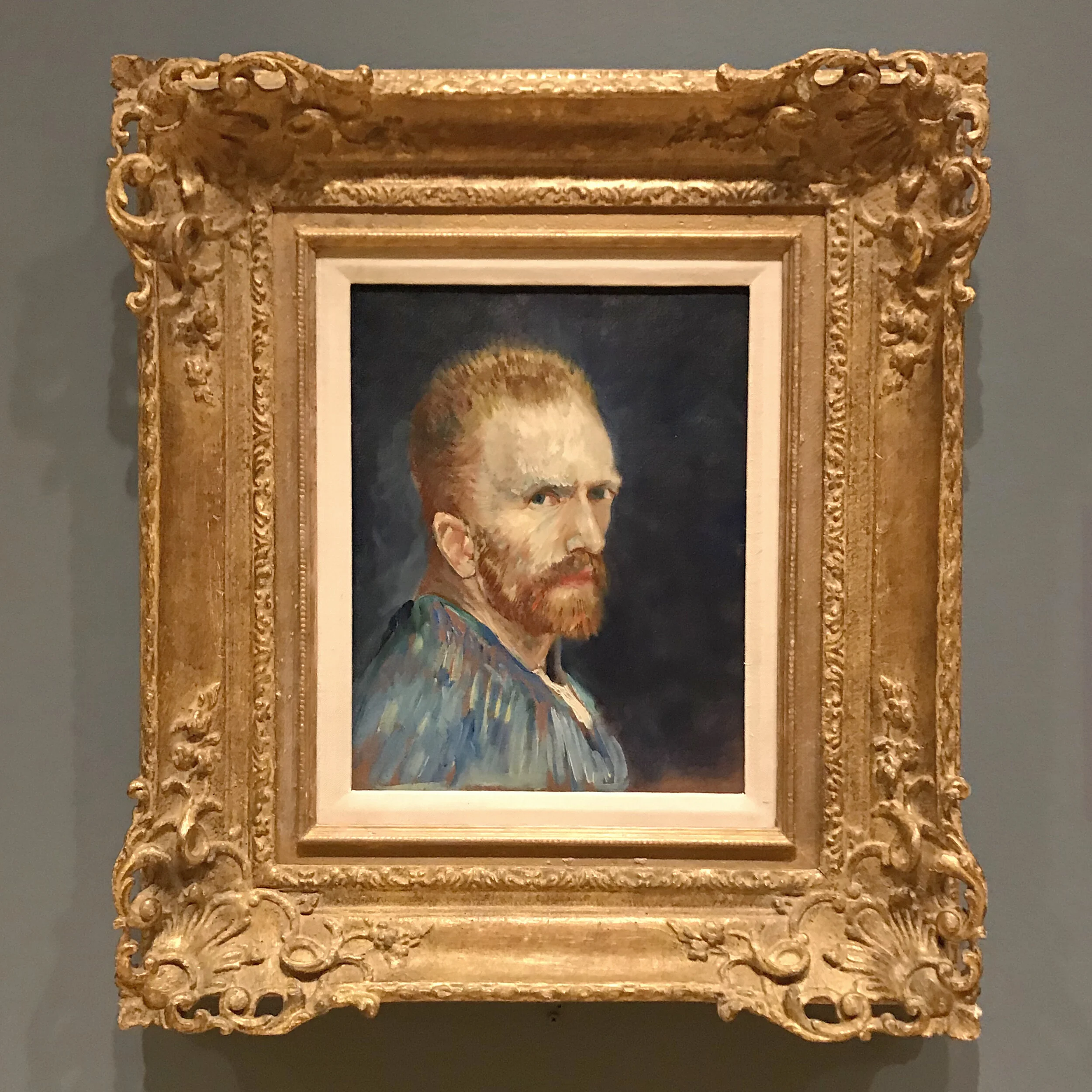
Self portrait in a snazzy gold frame.
I spent Saturday afternoon at the art museum. My daughter — to celebrate her 15th birthday — wanted to visit the Van Gogh exhibit* at the Columbia Museum of Art with a couple of her friends.
The exhibition highlighted not just Van Gogh’s art, but also the artists that influenced him. It’s important to remember that everyone — even a master like Van Gogh — was influenced by the world and art around him.
I’ll also add that if you have an art museum near you, go visit it. We don’t visit the Columbia Museum of Art frequently enough. Today, we spent a little extra time upstairs looking at the permanent collection and I found a few new pieces that I don’t remember seeing before and found interesting.** It’s a great collection and we are lucky to have it here in Soda City.
* If you are in the Columbia area, check out the Van Gogh exhibit. It’s up through January 12, 2020.
** They recently expanded the galleries in the permanent collection. So it’s quite possible they are, indeed, newly on display.
Bob Wertz writes about design, technology and pop culture at Sketchbook B. Bob is a Columbia, South Carolina-based designer, researcher, college instructor, husband and dad. He’s particularly obsessed with typography, the creative process and the tools we use to create.
4/4/17 • 4 min read
This post was originally posted on April 5, 2017 on Sketchbook B. It’s reposted here as part of a project to move some of my favorite writing to my new site.

Designing a logo is only the beginning…
A few weeks ago, I drove into work, listening to podcasts along the way in. Specifically, I was listening to Roman Mars interview one of my favorite designers, Michael Beirut, about logos. And specifically, the “bloodsport” that is public criticism of logos.
And then, shortly after arriving at the office, the Columbia Visitors Bureau unveiled their new logo and tagline for Columbia, SC. And my little geographic corner of social media exploded. I received text messages and direct messages asking what I thought. It was a hot topic of discussion around the office.
As a rule, I don’t normally critique work by other firms. I don’t know what they discovered in their research. And I didn’t work with their clients and deal with their constraints. I will say that like most designs, there are things I like and things I don’t like. But this blog post isn’t about the new Columbia logo.
Instead, it’s about how we rollout new identities.
It occurs to me that more than ever, the rollout of a logo is a critical part of it’s reception. New designs spread quickly across social media. Opinions form. Criticism starts immediately. And people start asking questions.
I first saw the logo on the article from the Free Times. And the main image was an ad, that used the new Brick C* as an element in the word “crafted.” Of course, it read “rafted.” Much of the early criticism I saw was centered around this ad… not the logo. There was confusion about how much was spent on the logo and research. Questions about why the work wasn’t done in Columbia. Every question about inspiration, cost, how the vendor was chosen could have been easily predicted and shared proactively on a web site at launch.
Would it have eliminated criticism? Absolutely not. There are people in any community who are going to hate anything you do and complain about any money you spend on design.** But being more strategic about the rollout might have helped rally some support, especially from designers and communications professionals.***
In today’s world, design firms need to start building extensive rollout planning into their budgets and plans. It’s not good enough to do the work for the client anymore — you have to help sell the final solution to stakeholders.
And clients need to accept that their audiences may be resistant to new identities and be prepared for strong — and likely critical — opinions. An extensive rollout plan is going to add to the time and cost, but is a critical part of your overall investment.
I don’t know when I’ll rollout a brand new identity again. But when I do, I will spend as much time planning the rollout as I do the fine tuning the design.
* USC’s athletic logo is the real block C. So I’m calling the new Columbia logo the brick C, since bricks are the inspiration for the mark. A local firm would have known that a prominent mark in town was already referred to as the block C.
** I saw some comments on social media asking why we couldn’t have a design contest like we did for the new flag. Sigh… it’s a slippery slope, y’all.
*** This week, the IABC chapter in town had a presentation on the new identity. I didn’t get to go, but from the reaction on Twitter, it seemed filled with insights and explanations for the approach. Imagine if the IABC presentation had been given the same day as the rollout. Or even the day before as a sneak preview…
Bob Wertz writes about design, technology and pop culture at Sketchbook B. Bob is a Columbia, South Carolina-based designer, creative director, college instructor, husband and dad. He’s particularly obsessed with typography, the creative process and the tools we use to create. In his spare time, he attempts to be diplomatic.
11/19/16 • 2 min read
This post was originally posted on November 19, 2016 on Sketchbook B. It’s reposted here as part of a project to move some of my favorite writing to my new site.
This man loves to create.

I saw Aaron Draplin for the fourth time on Thursday night when he came to the Half and Half in Columbia. Over the last years 15 years or so, between CCAS, AIGA South Carolina and Converge SE, we’ve had a bunch of awesome designers come through Columbia… DJ Stout, David Carson, Chip Kidd, James Victore, Seymour Chwast, Michael Beirut, Sean Adams, Sagmeister… and that’s a really incomplete, partial list.
But Draplin is one of my favorites.
What I love about Draplin is how much he loves to make things. Other designers are passionate about solving business problems. Or challenging convention. Or tackling large international clients. But Draplin loves to create things. Sure, he solves problems for clients, he challenges conventional thinking, he has some large international clients. But the thing that really seems to drive Draplin is putting things out into the world, which I really do feel makes him unique among the big names in design.
(It’s also the reason why Draplin’s work is known beyond the design world. Field Notes is loved by people all over the world and they love Draplin, too.)
If he comes to a town near you, see him. You won’t be disappointed.
Bob Wertz is a creative director, type designer, Ph.D. student and researcher living in Columbia, South Carolina. His blogging journey started in 2008 with a Squarespace hosted blog.
10/5/15 • 2 min read
This post was originally posted on October 6, 2015 on Sketchbook B. It’s reposted here as part of a project to move some of my favorite writing to my new site.

Bridge closed
My hometown of Columbia, South Carolina was pummeled by a once-in-a-lifetime storm this weekend. Over a foot of rain in less than 24 hours. Creeks, rivers and ponds overflowed. Dams gave way. Interstates were flooded and closed. Neighborhoods were evacuated.
Early Sunday — before I really understood the magnitude of what was going on — I walked down to check on the creek at the entrance to my neighborhood. As I walked down the hill, I could hear the roar of rushing water. The bridge was closed and the creek was massively overflowing. People were stopping and taking pictures. I stopped and took photos, too.
Normal people are documenting the terrible things happening around them and sharing them with friends and news outlets. Every person with a cellphone is a reporter.
As the day progressed, I got a constant stream of updates from Twitter, Instagram and Facebook. What roads are flooding? How much longer is it going to rain? Videos and pictures of roads underwater, bridges failing and daring rescues. It was a very personal and terrifying way to experience a natural disaster.
I remember Hurricane Hugo in 1989, which was the biggest natural disaster I had experienced personally. We followed the TV news and got updates from morning and afternoon papers. Without the internet, it was challenging to get much detail on what was going on.
Now, in 2015, I watched a little bit of storm coverage on the Columbia NBC affiliate, WIS, but most of my news came from Twitter. Getting information wasn’t a problem at all. Information was coming from all directions.
In a crisis, this flood of information from social media is disorienting. Immediate. Powerful. Raw. Intense. There is an overwhelming sense of anxiety. It’s also unfiltered. Serious news, alerts, hoax and rumors are mixed with NFL banter, cat videos, tech talk, ads and more.
As communicators in a social media environment, we need to accept this complex environment and figure out ways to help our audiences process what is happening around them. The goal should no longer be about simply adding more stories, pictures and videos to a vast virtual stream. Anyone with a iPhone can do that. Our value is in structuring and organizing information and in presenting clear, relevant messaging when our community needs it.