

The market is crowded today.

This post was originally posted on August 31, 2019 on Sketchbook B. It’s reposted here as part of a project to move some of my favorite writing to my new site.
Last summer, my family and I played a summer-long version of the license plate game. It took a while, but we found all 50 states — plus some Canadian provinces and a few other odd plates. We’ve seen many license plates, and while some are classic designs, honestly, most of them are ugly. There are technical challenges to designing a license plate and many of the designs were selected from design contests and saddled with colors, slogans and imagery.

South Carolina tag from 1975
My father loves visiting antique stores and a while back, he gave me an old South Carolina license plate that he’d found. It’s from 1975 and is a simple, minimal design. Garnet background, white letters. I’ve always liked this vintage look and wished that South Carolina had a license plate that was more refined.
This week, I saw an article that Iowa has released “blackout” plates. Any Iowa resident can request a new plate with a simple black field with white letters. Iowa’s standard plates were voted on by people who attended the State Fair, but from news accounts, a large number of people weren’t happy with any of the designs and the legislature approved the blackout tag as an additional option.
It’s not surprising these blackout plates are popular. No one really wants an overly graphic and colorful license plate laden with tourism marketing slogans. Some people will always prefer a minimalist option and if South Carolina offered a similar “blackout” option, I know I’d order one for my car.
Bob Wertz writes about design, technology and pop culture at Sketchbook B. Bob is a Columbia, South Carolina-based designer, researcher, college instructor, husband and dad. He’s particularly obsessed with typography, the creative process and the tools we use to create.
I stopped by @uofsclibraries to check out the new comic book exhibit. It’s awesome…

Ryan wanted to do yoga with Jilly.

This post was originally posted on August 24, 2019 on Sketchbook B. It’s reposted here as part of a project to move some of my favorite writing to my new site.

Recently, I was in Canada and pretty much every single transaction was completed with Apple Pay.
I love using Apple Pay instead of having to pull my card out and insert it. So I take advantage of it every chance I get. I was excited when Target added Apple Pay earlier this year.
But since I’ve been back, I’ve noticed just how rare it is for people to pay with Apple Pay in the United States — especially with an Apple Watch. I had a cashier at a Walgreens comment that she’s never seen anyone pay with their watch. A lady behind me at Target the other day told me that she didn’t even know you could pay with a watch. And today, a “helpful” cashier at Staples warned me that paying with an Apple Watch “was the easiest way for people to steal your identity.” (I explained to him that he was completely wrong.)
Apple Pay (and its peers) are more secure, more convenient and faster. Considering that so many people have iPhones and Android phones, why aren’t more Americans taking the leap to contactless payments? And why are some vendors slow to install the hardware that makes contactless payments as common in the U.S. as they are in other countries?
Bob Wertz writes about design, technology and pop culture at Sketchbook B. Bob is a Columbia, South Carolina-based designer, researcher, college instructor, husband and dad. He’s particularly obsessed with typography, the creative process and the tools we use to create.


Team Wertz First Day of School 2019. Our usual way-too early-because-Mom-is-a-teacher picture. Norah in 9th. Jill in 6th. Ryan in 2nd. And Liz is teaching kindergarten.

This post was originally posted on August 21, 2019 on Sketchbook B. It’s reposted here as part of a project to move some of my favorite writing to my new site.


Twenty years ago today was a typical summer Saturday in South Carolina — sun-drenched, oppressively hot and miserably humid. A perfect day to be at the beach or in the pool with a cool drink in your hand.
I was wearing a black tux.
Getting married in the middle of summer wasn’t the best idea I’ve ever had, but marrying Liz was. Today, Liz and I celebrate our 20th wedding anniversary. Over the last two decades we’ve had our fair share of high and low points. We’ve welcomed three amazing kiddos into the world and we’ve mourned the loss of close family. We’ve struggled together through career changes and grad school. We’ve learned to be parents together. (Hell, we’ve learned to be adults together.) We’ve watched good movies and really cheesy made-for-TV Christmas movies.
Liz is an amazing partner. Smart, curious, patient, kind, talented, supportive. She’s my best friend and she’s even more amazing today than the day I met her.
The funniest thing about our August anniversary is how ridiculously inconvenient it is. Liz didn’t originally plan on being a teacher, so we didn’t think about the fact that our August anniversary would pretty much be the first day of school every year. It seems like every year — just like we did this morning — we celebrate our anniversary by taking the traditional first day of school pictures on the front steps before sunrise and then have dinner with the family to celebrate the new school year.
I wouldn’t have it any other way.
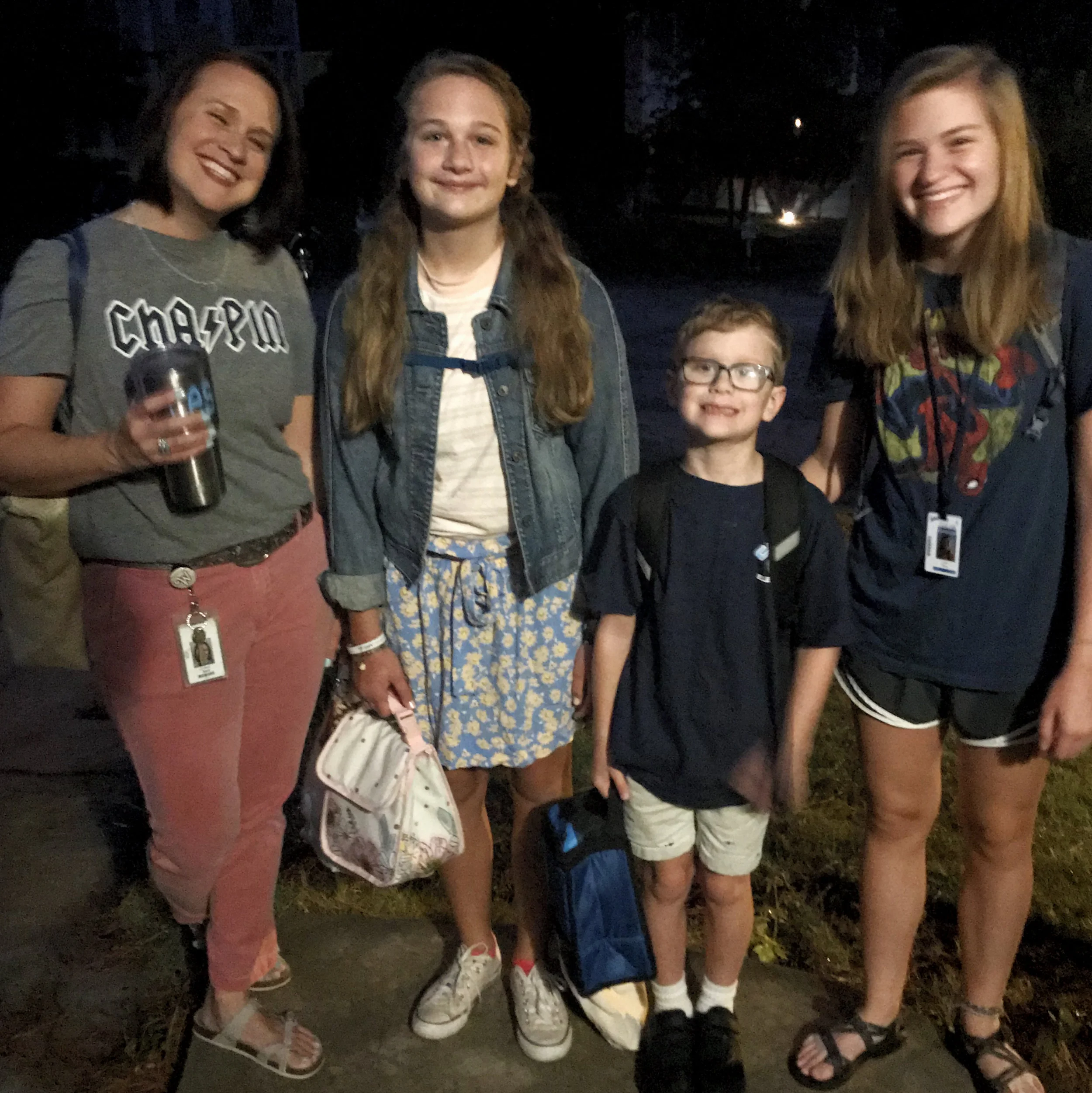
How we celebrate our anniversary now…
Bob Wertz writes about design, technology and pop culture at Sketchbook B. Bob is a Columbia, South Carolina-based designer, researcher, college instructor, husband and dad. He’s particularly obsessed with typography, the creative process and the tools we use to create.
Spotted on campus.

Heading home.

Early flight out of Toronto.


